THE WORK WARDROBE – New Rules
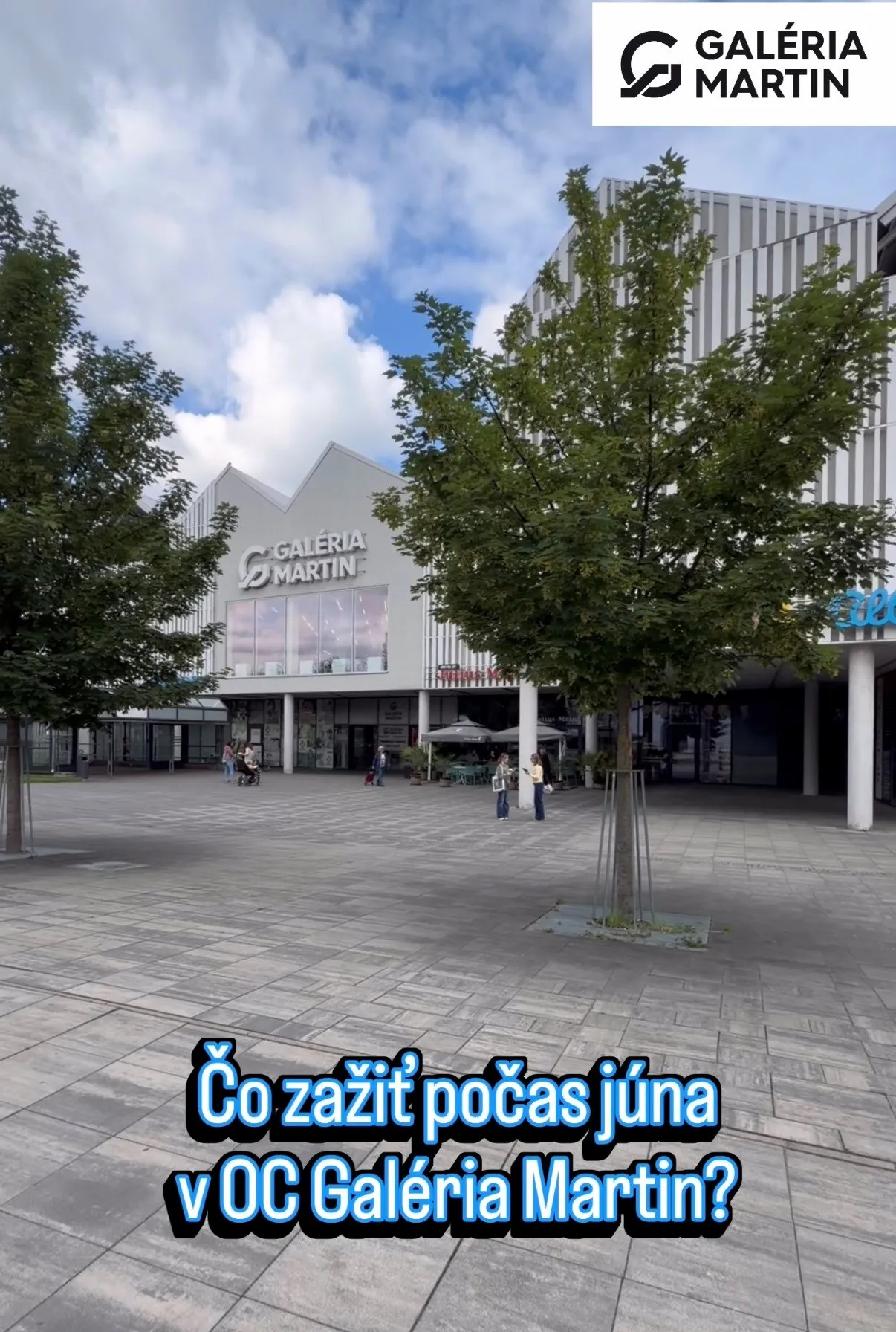
Throughout October – for the second time this year – you can pick up fresh inspiration at the fashion installation in our Galéria shopping centre.
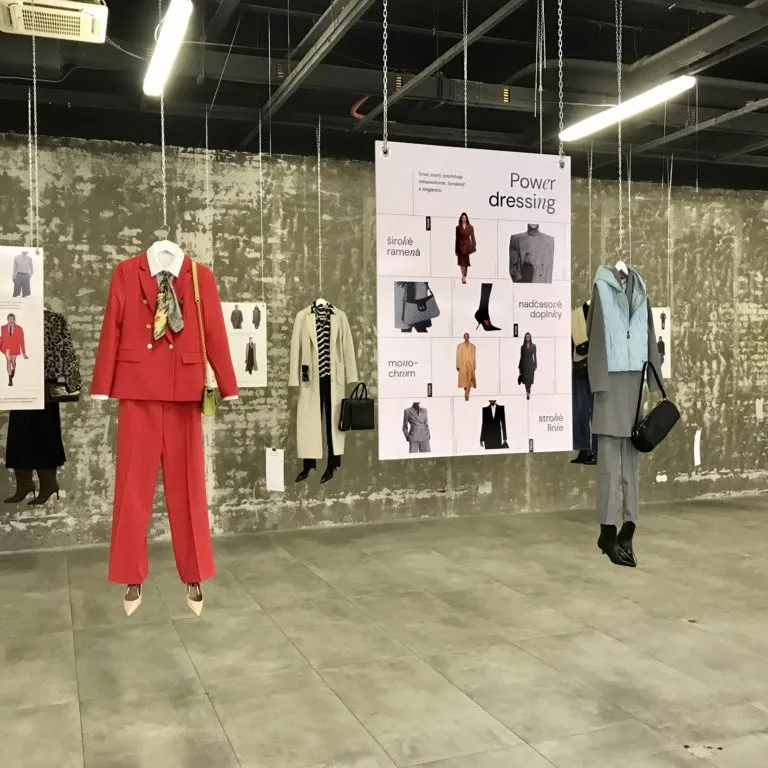
Throughout October – for the second time this year – you can pick up fresh inspiration at the fashion installation in our Galéria shopping centre.
The current theme is devoted to the new rules of dressing for work. We talked about them with the creators of the installation – stylist and fashion coach Ľubica Kmeť Jakušová and fashion editor Jana Bíziková.
First, let’s introduce the concept of fashion installations in general…
Ľubica: Fashion installations are proof that in every town in Slovakia you can buy interesting pieces and dress tastefully, with a sense of harmony between your own lifestyle and current trends.
They connect the theory of the trendsetters and the inspiration of collections by world-famous designers with practical demonstrations of how all this can work in our everyday lives – in any town in Slovakia. It is important to us to put together inspiring outfits that are wearable in real life in that particular place – based on the climate and the rhythm of life of the people who live there.
Thanks to them, customers get inspiration and the chance to shop in one place.
Unlike the mannequins in shop windows, the installations combine products from different brands. That is another message they carry – to liberalise fashion and connect the identities of different brands.
How are they prepared?
Ľubica: There are currently three people in our team plus one intern. Janka researches the runway shows and we brainstorm the texts together, and my husband, who is responsible for the graphic visuals, joins in too. A few days before the installation I go round the shops to borrow pieces, from which the final stylings matching the theme are created. Then comes the installation itself in the shopping centre – outside opening hours, of course, so we keep the night-time security guards company 🙂 The last step is balancing the outfits so they don’t turn and so the accessories point where they should – and that is painstaking work. In those moments I always have a little smile to myself about how I once thought I would never need physics and maths in my life 😀
Janka, so you look for inspiration on the world’s runways, which overflow with extravagance and even – hand on heart – unwearability; they feel so far removed from our everyday reality. Was that one of the reasons you decided to join the team? To show that it can be done?
Janka: Definitely. The very idea that the fashion of prestigious brands and fashion houses showing at the fashion weeks in metropolises such as New York, London, Milan and Paris is unwearable seems completely absurd to me. After all, its very classification and label – ready-to-wear – tells you that it is “ready to be worn”. And people really do wear it – logically, why else would the groups that own these brands be among the richest in the world… What I notice, though, is that the view that high fashion is completely detached from ordinary reality is widespread mainly among people who aren’t very interested in fashion. What plays a key role at the shows (and what can come across as extravagant) is the styling (often together with make-up, hair…) and the overall image that the brand and its designer create and sell. Take, for example, the Prada jacket in brown brushed leather, or the cashmere jumper underneath it, from the Italian brand’s autumn collection. Both pieces would seem perfectly wearable and completely “ordinary” until we see them combined with a white, down-filled miniskirt that looks like a sleeping pillow. That is exactly the styling and combination the designer Miuccia Prada chose for the show. And it was precisely this that earned her the critics’ acclaim. We mustn’t forget the artistic side of fashion. Yes, fashion (like design in general) links art, craft and the industrial production of clothing as consumer goods into a complex machine. If art and an individual approach disappeared from it, we might as well all walk around in uniforms.
Another important factor to notice and be aware of is that fast-fashion chains follow the trends set by designers on the runways and copy them in most of their clothing – from the style to the colours, patterns and cuts… What fast fashion in the chains often lacks, however, is perfectly worked-out details, quality materials and the original idea. Those are exactly what renowned designers bring. Essentially, all of us wear more or less successful knock-offs of the very brands we claim are unwearable.
The fashion installation project is clear proof of this. On the inspiration panels we always present the latest trends from the collections of world designers, and in the outfits we put together you can then see their journey all the way here – into our everyday reality. Into clothes available in the shopping centre’s stores.
The theme of the current installation in Martin is the work wardrobe – why this theme? How do you choose the themes of the installations?
Ľubica: We prepare the installations around themes that resonate on the fashion scene and in our society. The pilot installation was devoted to the Colour Trends for 2023. What it has in common with the current theme of the Work Wardrobe is that it still reflects what the Covid pandemic changed in us and in our society. Our installations always have a central idea that we reflect on and invite visitors to reflect on too. When I watched the people who stopped at the installation, some looked at the outfits, some paused at the texts and others even read the editorial 🙂 Yes, that’s exactly how I imagined it – let everyone take from the installation what they need. Apart from the displayed pieces, that is – ideally those shouldn’t be touched, not out of any vanity on our part, but because it is an installation and you can’t imagine how much precise work it takes to get it into its ideal form.
The subtitle reads “New Rules” – what new rules in dressing for work are you observing?
Ľubica: What’s new is that these are rules that aren’t enforced but offered. They stem from the way we feel lost amid social – and perhaps personal – disorder. People who amaze us by living to a ripe old age have exactly this in common: they have their own rules that they have respected for years. For their own sake, for the sake of order within themselves.
By the way, who at work tells you anything about your appearance these days, let alone sets any rules and limits? I’ll be a little personal, but don’t you feel we live in a time when we are afraid of conflict and offence, and would rather hide behind concepts such as uniqueness, authenticity and free will? When the head teacher of a Slovak secondary school told me they have big problems with how the pupils dress, but they won’t give them any rules because they want to avoid conflicts with parents, I’m not surprised we have so many “problematic” young people and equally “problematic” parents of those young people.
Why is it important to take care of your appearance in the workplace? Surely knowledge and skills should come first.
Ľubica: Do you know this one? “Je to pravda odvěká, šaty dělaj člověka” – it’s an age-old truth: clothes make the man. And that wasn’t said by any fashion guru, but by one of the great observers of human behaviour in society.
As food for thought, I’ll also mention the explosion of studies devoted to our mental state during working hours in the pandemic, when we sat at our computers in pyjamas and tracksuits, as well as publications such as Dress for Success by John T. Molloy, which addressed what people commonly experienced in the workplace. For my part, I’ll add an observation from my own practice – if you are incompetent in your profession and use clothing as a tool of manipulation, it takes quite a long time for your incompetence to be exposed. If you are competent but pay no attention to your appearance (often personal hygiene is involved too), it takes a long time for those around you to accept your qualities.
How has fashion registered the return of formal clothing?
Janka: After the slump caused by the pandemic, demand for formal clothing is reviving on the market. But really, what fashion is dealing with right now isn’t so much its return as new forms of formal clothing. Formal wear is taking on new definitions as people rethink how they dress for work, weddings and other special occasions. If we leave aside eveningwear, which also falls under formal, and focus on clothing for everyday wear to work, we see a relaxation and a more creative approach. As Ľubica already said: “the rules aren’t enforced but offered…” New styles, referred to by terms such as “smart casual” or “power casual”, bring versatile pieces that can be dressed up or dressed down through the overall styling.
In women’s wardrobes, where dresses have long ruled both office and evening outfits, 2022 brought a fresh take on the trouser suit. Brands showed oversized jackets and trousers in soft materials for customers looking for a polished, fashionable yet comfortable style. Others expanded their range with structured knits. According to statistics, sales of power-casual clothing are rising overall, while for dresses, which dominated this segment before the pandemic, the opposite is true. These changes are even more visible in menswear, as the importance of the traditional suit declines. Market leaders have therefore quite effectively shifted their focus from traditional workwear and suits to hybrid pieces that can work well across a range of activities. For the consumer this is also an economical solution, which – looking at the current situation (war, the energy crisis and the economic crisis that followed…) – is further proof that trends are a mirror of our needs.
photos: Valerie Hollá, Jana Bíziková